About Me
I received my Ph.D. in Biochemistry and Molecular Biology in 2002 in the laboratories of Drs. Fern Tablin and John Crowe at the University of California, Davis. My work focused on platelets, the cells that make blood clot, and showed that one of the key steps in their activation is the formation of lipid rafts. After rafts form, the cells show other signs of activation, such as increased calcium levels, showing that lipid raft formation is a general first step in platelet activation.
I then joined the lab of Dr. Michael Edidin at Johns Hopkins University where I further studied the role of lipid rafts as a possible mechanism for transport of GPI–anchored proteins in polarized epithelial cells using FRET. In that study, I showed that GPI–anchored proteins are selectively clustered along the apical transport pathway (i.e. from the Golgi to apical surface) and that they quickly become randomly distributed once at the cell surface. This work led to co–authorship on a paper published in Cell: Sharma, Pranav; Varma, Rajat; Sarasij, R.C.; Ira; Gousset, Karine; Krishnamoorthy, G.; Rao, Madan; Mayor, Satyajit (2004). “Nanoscale Organization of Multiple GPI–Anchored Proteins in Living Cell Membranes.” Cell 116(4): 577–89.
In 2004, I joined the lab of Dr. Eric Freed as an NIH Cancer Research Training Fellow and worked on HIV–1 trafficking in macrophages. My work there confirmed that the matrix domain of Gag is required for its recruitment to the synapse. That study further demonstrated that HIV–1 particles are retained in internal reservoirs from which they can be rapidly released at opportune times, such as when contact is established with uninfected cells. The Tetracysteine (TC) system I developed provides an efficient way of observing Gag trafficking in living cells without disrupting the normal virus assembly and release and is likely to become an important tool in identifying molecular clues for HIV–1 trafficking within and between cells. The results of this study may also set the groundwork for the development of new HIV treatments based on interruption of intracellular viral trafficking. This work received the NIH/NCI Award for Top Advancement in HIV/AIDS in 2008.
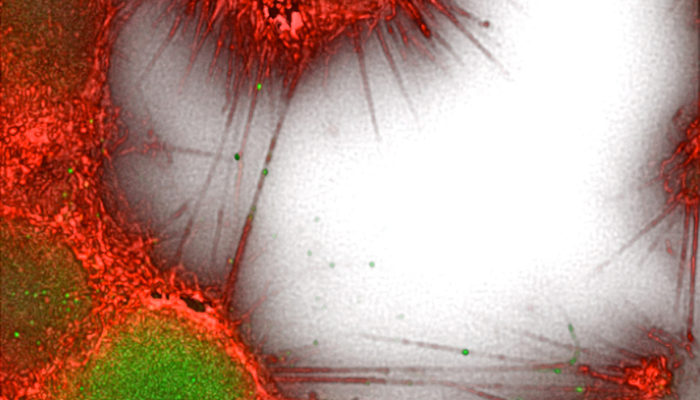
In 2007, I was awarded a three–year Pasteur Foundation Fellowship to join the Pasteur Institute in Paris, France. In 2010 I applied for, and was awarded, a coveted Pasteur Institute research position. The emphasis of my work was on the role of tunneling nanotubes (TNTs), a newly discovered type of intercellular transport, in the spreading of prions in neuronal cells. This work was published in Nature Cell Biology entitled, “Prions Hijack Tunnelling Nanotubes for Intercellular Spread,” along with the News and Views and cover page. My follow–up paper in October 2013 highlighted the importance of the actin molecular motor Myosin–X in the formation and function of TNTs.
Finally, in 2013 I joined CSU, Fresno as an Assistant Professor of Virology, where I am continuing my work on the role of TNTs in the spreading of viruses and misfolded protein aggregates leading to neurodegenerative diseases.